

Artificial Intelligence Takes Center Stage at 2026 WeTeach_CS Summit
10th annual conference highlights AI's promise — and the need for clearer guidance — in Texas schools
10th annual conference highlights AI's promise — and the need for clearer guidance — in Texas schools
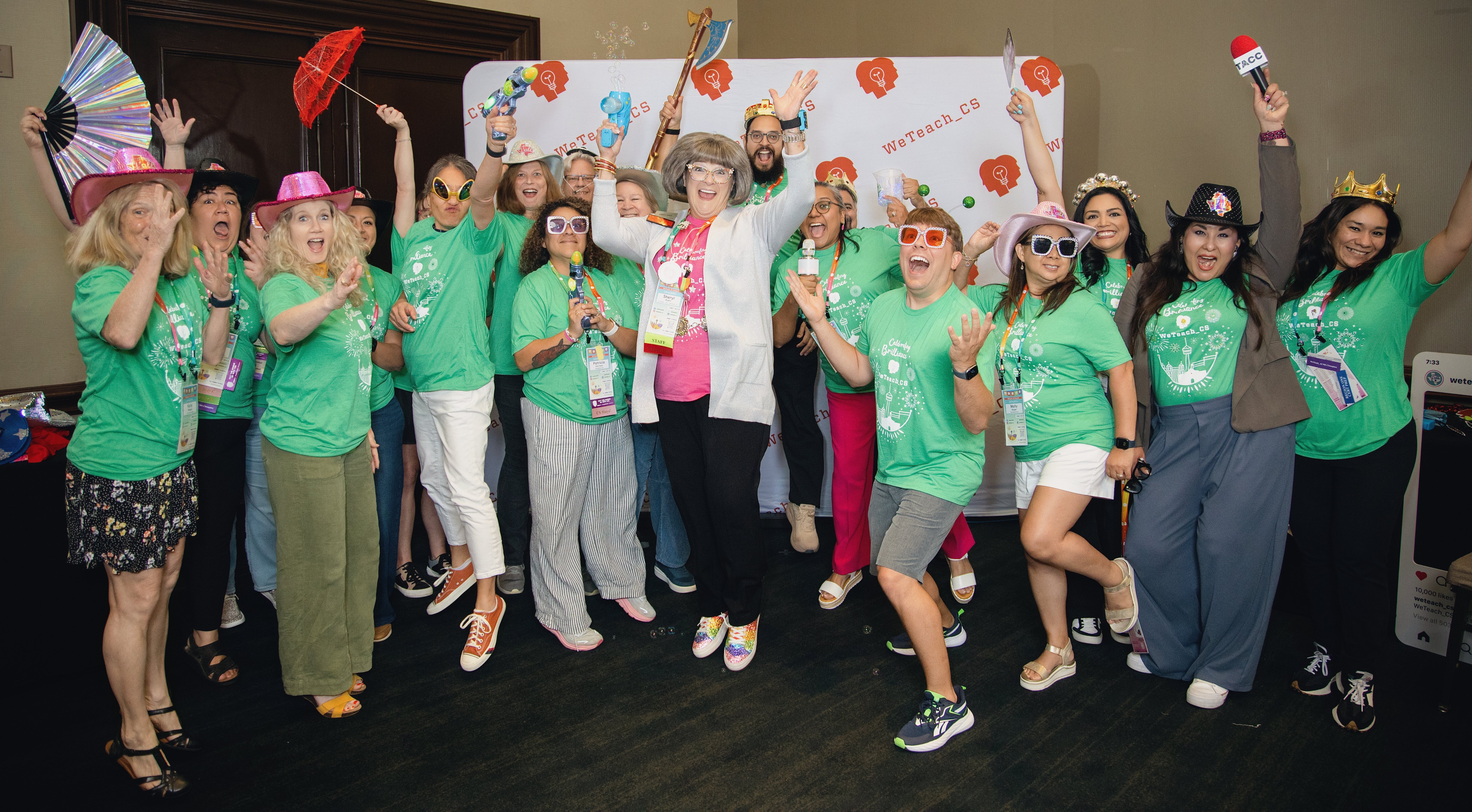
Texas is one of five states with no formal artificial intelligence (AI) guidance for K-12 education, despite the rapid growth of student AI use. About one-quarter of Texas school districts provide AI guidance for teachers or students, leaving many educators and students without formal direction on appropriate use.
The 2026 WeTeach_CS Summit featured 13 sessions focused on AI and data science, offering educators and policymakers an assessment of AI adoption in Texas schools and strategies for implementation.
“AI is already reshaping how students learn and how educators teach, so it’s our responsibility to ensure that every educator has the knowledge, confidence, and guidance to use it in ways that are safe, ethical, and meaningful,” said Allen Antoine, EPIC Director of Computer Science and AI Education at the Texas Advanced Computing Center. “Our team works alongside educators and partners across the nation to build AI literacy through professional learning, district planning, and practical classroom resources so that every student is prepared for an AI-partnered future.”
WeTeach_CS is the professional development arm of TACC’s Expanding Pathways in Computing (EPIC) program, which provides educators with training and resources for computer science instruction.
Fueled by generous support from Summit sponsors Google.org, the Texas Computer Science (TX CS) Pipeline Initiative, AP Career Kickstart, and the Texas Advanced Computing Center, approximately 700 teachers, advocates, administrators, professional development providers, university instructors, and policy makers gathered in San Antonio for the 10th annual Summit, making WeTeach_CS the largest state K12 computing conference in the country.
AI Takes Center Stage
Over the past 10 years, the WeTeach_CS program has expanded the scope of its computing related professional development to include emerging and frontier technologies such as cybersecurity, quantum, data science, and AI. At this year’s Summit, AI was everywhere, reflecting the demand from the WeTeach_CS community to help students navigate the rapid proliferation of AI into their daily lives. Breakout sessions covered topics like industry perspectives on AI literacy skills and ethical usage. Sessions were designed to equip educators who teach kindergarten all the way through high school. A featured panel of high school and college students discussed AI's benefits and drawbacks and shared recommendations for helping students develop responsible AI habits. The panel shared their perceptions about AI usage, its impact on their school experience, and tips for adults to help students navigate an AI-infused world.
“One of the concerns I have is that some students use AI as a replacement for their own knowledge,” said Aiden Sanchez of Karen Wagner High School in San Antonio, Texas. Added Haley Muñiz of UT San Antonio, “Some students use AI whenever they need quick answers, but my peers and I try to use it as a last resort. One of my professors showed us how to inquire of an AI chatbot to get better results.”
WeTeach_CS also introduced Summit attendees to the AI Literacy for Innovation, Growth, and Networking (ALIGN) Project, a national initiative led by the EPIC team that helps schools, educators, and communities implement AI literacy in ethical and practical ways.
“Seeing educators proud of their work and sharing about their AI literacy initiatives has been a great experience,” said EPIC Computer Science Education Specialist Elaine Soares. “Schools having no formal AI guidance is a problem because educators and districts are left to figure out how to responsibly use this emerging technology on their own.”
A Broad Range of Sessions
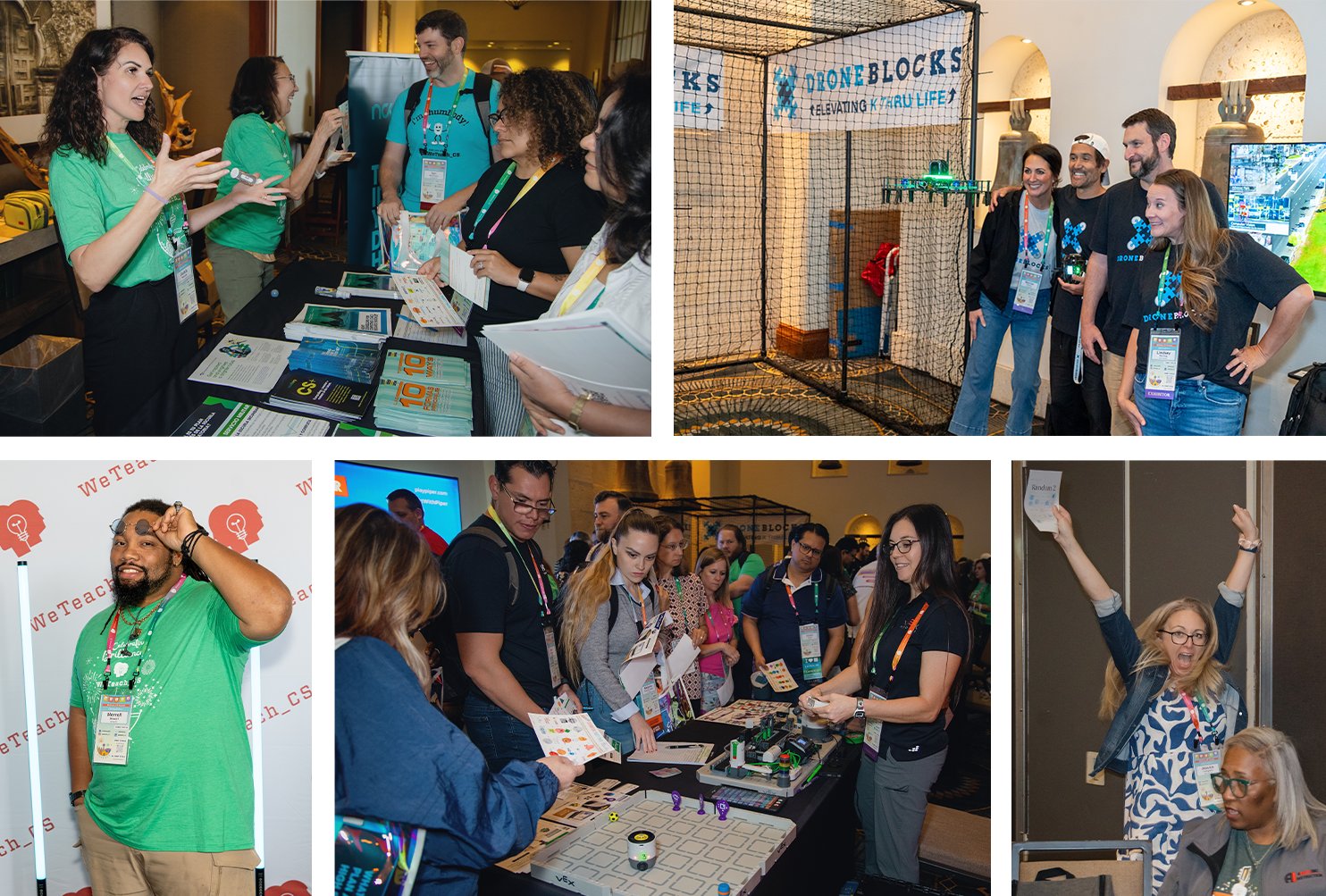
The Summit also featured hands-on, tangible breakout sessions on topics from broadening participation in computing to cybersecurity. Multiple sessions on micro:bits were specifically designed to aid educators in integrating CS across curriculum.
“We must provide educators with all the tools they need because they’re on the front lines teaching the standards mandated by state leaders,” said Katie Henry of the Micro:bit Educational Foundation. “It takes a village to raise a child, and whether you’re designing hardware, software, or learning materials, it takes a village to support our teachers.”
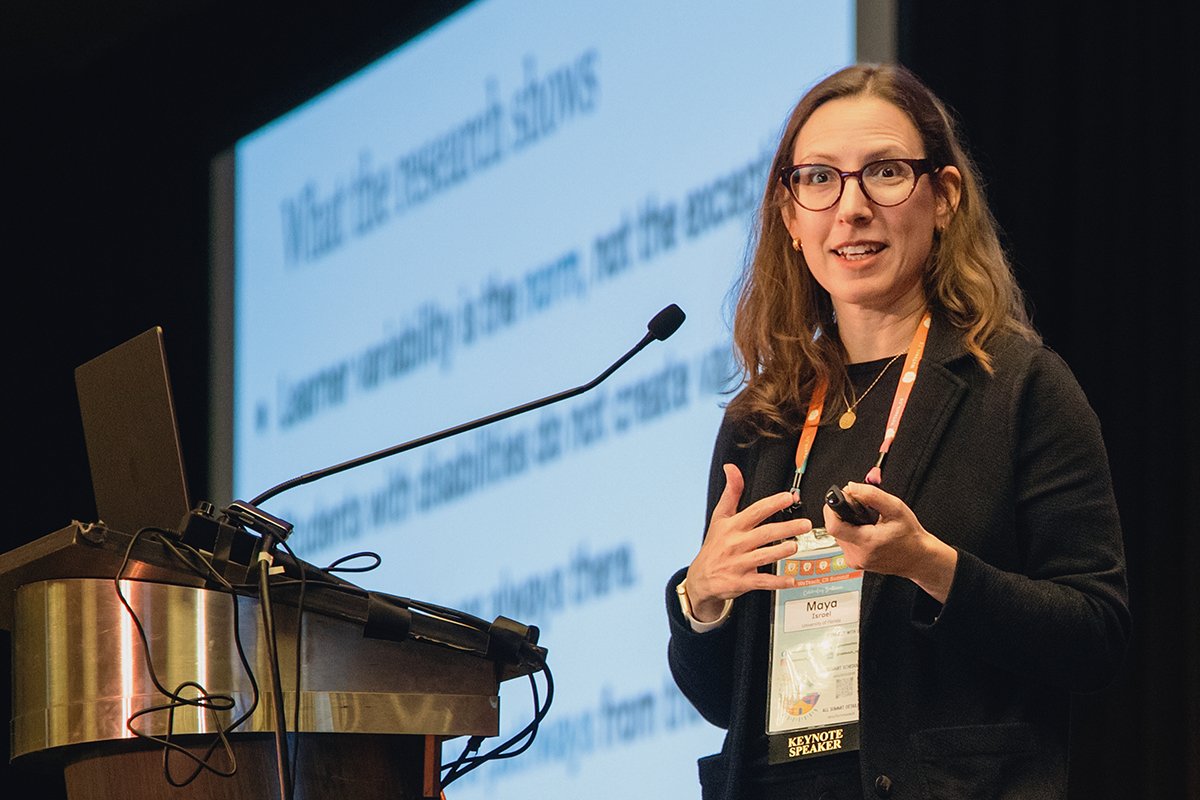
Summit keynote speaker Maya Israel explored how Universal Design for Learning can support broader participation in K-12 computer science education as schools expand access.
“It’s clear that we’re all united in the mission of bringing accessible CS education to every student,” said Israel, Professor of Educational Technology at the University of Florida. “From AI literacy to cybersecurity, students need access to these skills to be prepared for the jobs of tomorrow, and it’s on us as educators to possess the instructional approaches to help them get there.”
A Decade of Summits
What began in 2016 as a gathering of approximately 150 educators at UT Austin’s Commons Event Center on the J.J. Pickle Research Campus has grown into an all-inclusive opportunity of networking and learning. The 2027 Summit is predicted to welcome a record-shattering 1,000 attendees.
“A decade ago, the challenge was getting the word out to teachers who were interested in becoming CS educators,” said EPIC Director and WeTeach_CS founder Carol Fletcher. “When we began offering professional development events to help people pass the CS certification exam in 2015, there were teachers who drove 1,000 miles round-trip just for the training.”
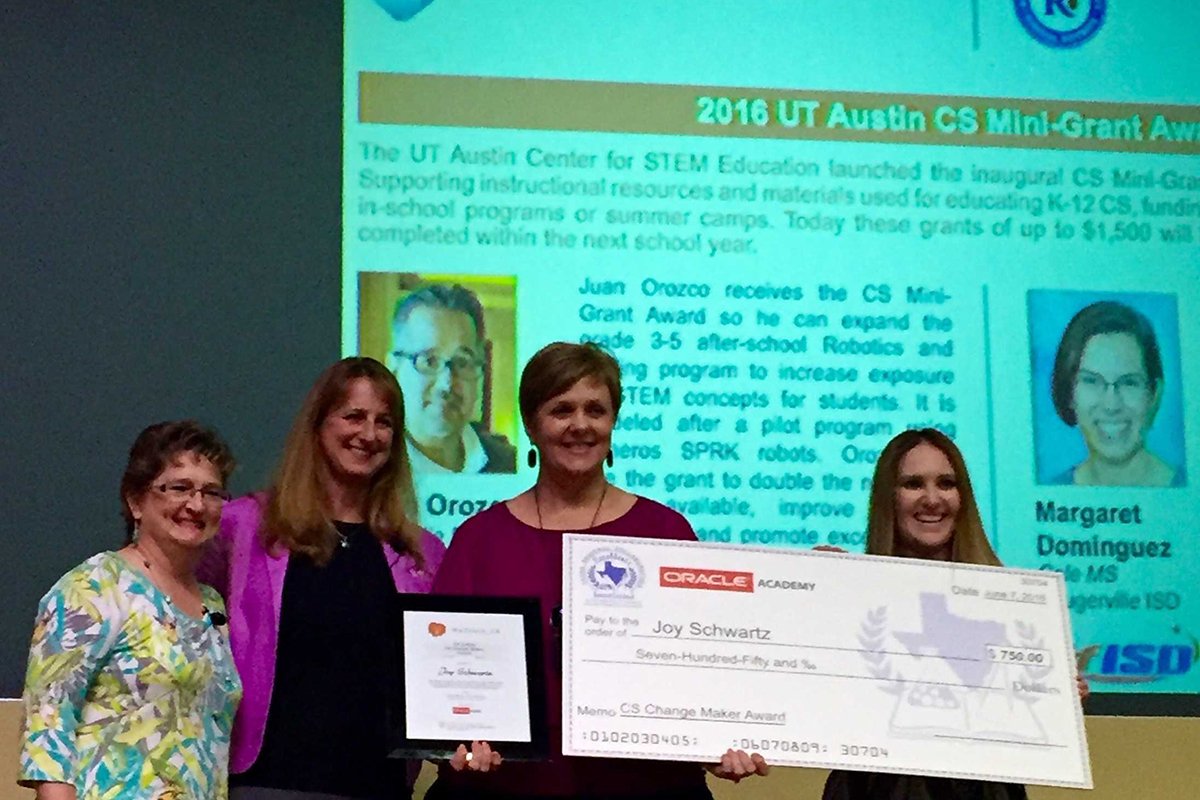
“Attending the first WeTeach_CS Summit felt like finding my professional home,” said CS educator Joy Schwartz, the inaugural keynote speaker. “During my address, my students joined me to share one of our most meaningful projects: a working 3D-printed prosthetic arm we designed for a little girl who was with us that day. This was a powerful reminder that computer science is about much more than coding. It’s about solving real problems and changing lives.”
Meet The 2026 Award Winners
WeTeach_CS recognized 23 exceptional educators with Mini-Grant and Change Maker awards, highlighting their outstanding contributions to advancing computer science education across Texas. Established in 2016, these annual awards are presented to dedicated CS teachers and administrators who bring innovative strategies to their classrooms and serve as leaders for expanded CS opportunities in their schools and districts.
Mini-Grant recipients received awards of up to $5,000 to support classroom projects. Change Maker recipients received $750 to expand computer science programs in their classrooms, schools, or districts. These awards were sponsored in part by College Board’s AP Career Kickstart program.
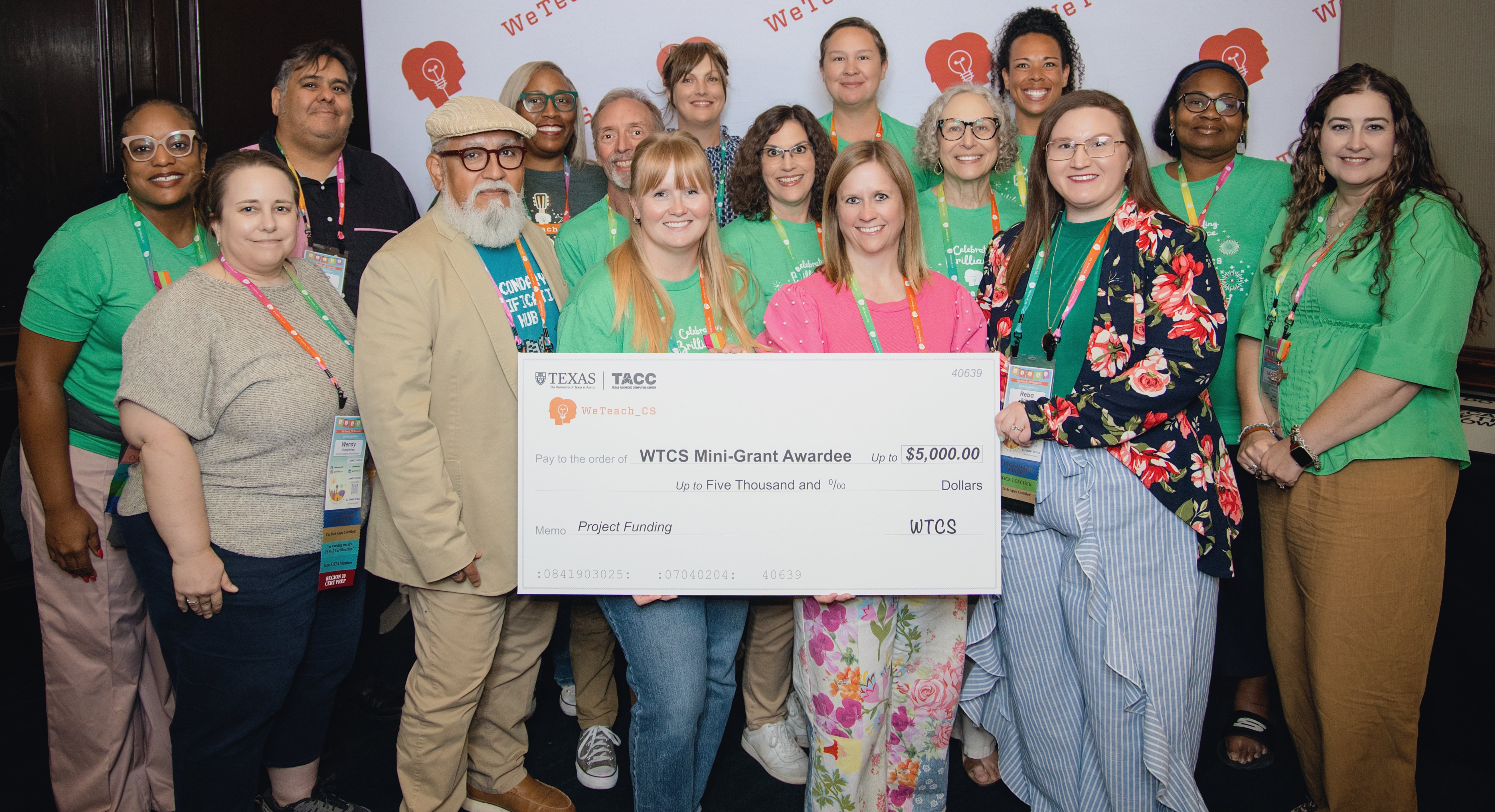
“As AP Cybersecurity launches nationwide, College Board is proud to partner with WeTeach_CS to celebrate the Change Maker and Mini Grant awardees — educators and administrators whose leadership is expanding computer science opportunities in their schools and districts,” said Juan Navarro, Senior Director of Policy. “By investing in their leadership and pairing that with College Board's professional learning opportunities in the fast-evolving field of cybersecurity, we're helping ensure that every student, no matter their background, has access to coursework that prepares them for today's most high-demand careers.”
“Teaching Computer Science is not just about writing lines of code; it’s about teaching students how to think critically and turn frustration into curiosity,” said Eybar Vasquez-Nevarez of Clint ISD. “Winning this award makes me feel seen by my peers, and I’d like to thank my principal — Elena Acosta — for being a supportive, excellent advocate of our CS program.”
List of Winners
2026 WeTeach_CS Change Maker Administrator Award Winner
- Elena Acosta, Clint ISD
2026 WeTeach_CS Change Maker Teacher Award Winners
- Eybar Vasquez-Nevarez, Clint ISD
- Kayla Abshire, San Marcos Academy
2026 WeTeach_CS Mini-Grant Award Winners
- Julleen Bottoms, Corsicana ISD
- Hayli Castillo, Graford ISD
- Pedro Delgado, El Paso ISD
- Albert Ervin, Mesquite ISD
- Morris Goldade, Wylie ISD
- Lajoy Grant, Midlothian ISD
- Reba Griggs, Levelland ISD
- Monica Hatley, Lancaster ISD
- Wendy Humphries, San Antonio ISD
- Ashley Kasner, Stephenville ISD
- Cherish Lloyd, Bosqueville ISD
- Timberly Lyimo, PTAA Greenville
- Chamonix Mann, Plano ISD
- Leigh Martin, Little Cypress-Mauriceville CISD
- Monique Mays, Fort Bend ISD
- David Padilla, South San Antonio ISD
- Eva Tristan, Pflugerville ISD
- Angelena Watkins, Judson ISD
- Elizabeth White, Hawkins ISD
- Cheryl Zalk, Georgetown ISD
Voices from the Summit: What Educators Are Saying
A sample of responses we received from Summit attendees:
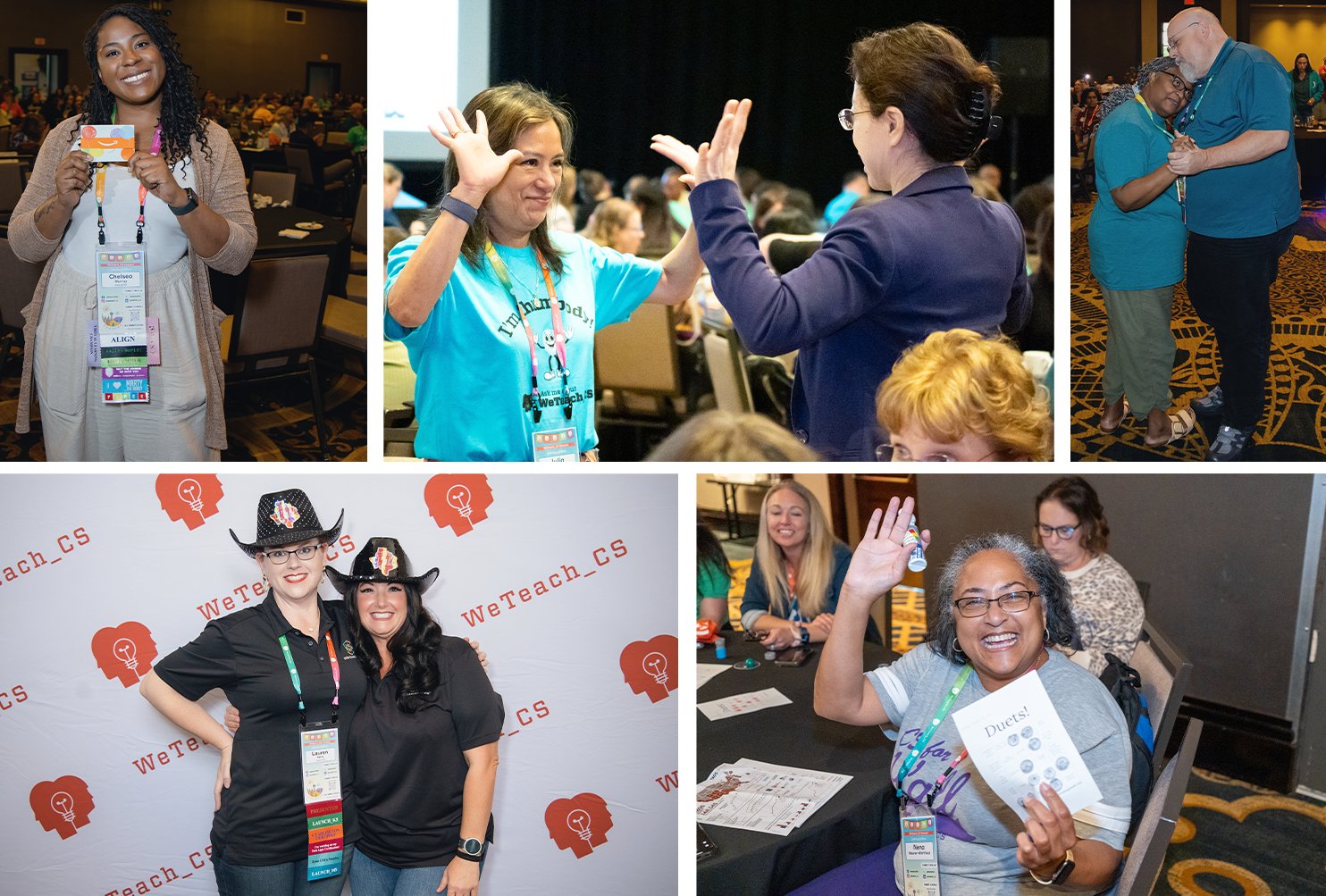
- I valued the wide variety of sessions available and how thoughtfully planned and organized the event was. I appreciated the hands-on activities, which made the learning experience engaging.
- I enjoyed the AI Student panel. It was inspirational to learn how to think more-broadly on how students experience the classroom and how they experience AI in their daily lives.
- I felt a true sense of community. I learned so much valuable info from others and felt like my presentation also helped others. I really appreciated the UDL keynote address.
Want to be part of a great community of CS educators? Mark your calendars for the 2027 WeTeach_CS Summit, set for June 28-29 in Houston!