

CEDI Q&A Series: Christopher Franklin
Veteran CS teacher sharpens skills in the Computing Educator Diversity Initiative (CEDI)
The 2020-2021 Computing Educator Diversity Initiative (CEDI) consisted of in-service teachers of color working together as they deepened their computer science content knowledge, pedagogical skills, and equitable strategies — as well as be supported in their efforts to obtain their high school computer science (CS) teacher certification.
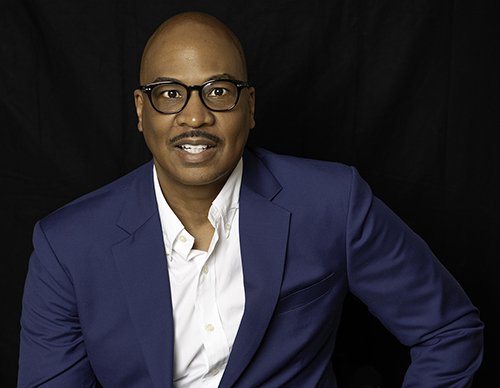
This is the first Q&A profile in the Expanding Pathways in Computing (EPIC) series on teachers' experiences with the CEDI program. Our first teacher is Christopher Franklin of Fort Bend ISD. Franklin has been a teacher for 17 years. He currently teaches CS, robotics, and engineering at Dulles Middle School in Sugar Land, outside of Houston.
We caught up with Franklin to listen to his experiences as a Black CS teacher, his time in the CEDI program, lessons learned from his cohort, and whether he'd recommend other teachers to join the program.
EPIC/TACC: What piqued your interest in CS and STEM? How did you decide to pursue this field as a career?
Christopher Franklin: Several years ago, a former coworker approached me about starting a robotics program at our school, which they had never had before. I attended a couple of trainings, and we had a budget, so we purchased some Lego NXT robots, and everything evolved from there. I love robotics, but I think computer science can help students and teachers more, so I started focusing on computer science. I took classes, went to trainings, and did anything I could to better myself.
EPIC/TACC: Do you have a main takeaway from your time in CEDI? Did you learn skills you may not have had previously, or were you able to sharpen existing skills?
Christopher Franklin: As a teacher, the main takeaway is to stay relevant in terms of your CS skills. Before CEDI, I wasn't good in Java. My specialty was in C, C+, C++, and Python. CEDI was all in Java, so it was a new challenge. I had a little bit of Java experience, but nothing like this program provided. Another takeaway is that there aren't that many teachers of color to draw these young people into CS to show them, "Hey, if they're doing it, maybe I can do it, too!" CEDI is comprised of teachers of color to help bring students of color into the field of computer science, trying to increase participation.
Christopher Franklin: Can I tell you a story?
EPIC/TACC: Of course.
Christopher Franklin: Some of my former students keep in touch to let me know what they're doing in high school and college. They are in the computer science or engineering fields, and they got the "CS bug" from me introducing it to them. It touches my heart when I hear from former students, and I haven't seen some of them in 10 years! Some of my former students are at the University of Houston studying computer science; some are studying engineering at Texas A&M. For me, that's the payoff. The saying goes, "If you love what you do, it's not work." I don't consider teaching CS as work.
EPIC/TACC: What do you hope to see for current and future CS students?
Christopher Franklin: Current high school CS students have offered to mentor middle school students, because those high schoolers never received mentoring themselves. They want to help me bring along the next generation of CS students and get them ready for high school. In return, I mentor these high school students for college and job interviews. I give them advice on how to do things. This is the cycle that I wanted to create, and it's working.
EPIC/TACC: How has CEDI inspired you to advocate for students of color?
Christopher Franklin: When I was in middle school and high school, I knew that I was not being taught what I should be, and I wasn't being included in things that I should have been included in because of how I look (Franklin is a Black man). I told myself that when I became a teacher, I was going to make sure to offer CS classes to every student. The CEDI program is geared toward not only getting teachers of color certified, but also encouraging school administrators and parents to tell the students that just because you may not see many kids who look like you in CS classes, you belong here. Many kids of color don't look at computer science as something relevant to their experiences, but I make it a point to tell them that CS touches every aspect of our lives. And I tell them that having CS skills will make them more marketable when they become adults and start searching for jobs. Historically, CS classes haven't been marketed to students of color, female students, and students from broken homes. People think they can't handle it or they're not academically able to keep up. Teachers who went through CEDI are trying to dispel those myths and bring minority and female students into the world of CS.
EPIC/TACC: Why should other teachers sign up for the CEDI program?
Christopher Franklin: Because it's well worth it. The tools you receive can easily be transferred into the classroom. If you put technology in front of kids and train them, it'll make them thirst for more. I'll go back to the word "relevant," because in my mind, technology changes quickly. Programs like CEDI keep you up to date on what's being taught in schools, and it helps teachers be more organized, manage their time better, and build their skill level.
EPIC/TACC: Thank you for your time and contributions to teaching CS and STEM, Mr. Franklin.
The CEDI Program has been funded by the National Science Foundation (NSF #1837602) and Microsoft. Read more in the CEDI Special Report.
The EPIC Team at the Texas Advanced Computing Center (TACC) exists to broaden participation in K20 computing pathways through research, outreach, professional development, and policy advocacy. To achieve this mission, we partner with school districts, institutions of higher education, industry leaders, and federal, state, and local government entities who are also dedicated to expanding access and opportunity for historically underserved students in computing.